
Nourishing change
SINCE 2019
AGRICULTRE
Nourishing Change: How Sustainable Agriculture Can Help Fight Child Malnutrition in Uganda
Every child deserves more than a meal. Every child deserves the nourishment needed to grow, learn, dream and reach their full potential.
Imagine a child going to bed hungry, not because food does not exist, but because their family cannot afford or access the nutritious food they need. Imagine a mother watching her child struggle to grow, wishing she could provide better meals but lacking the resources, knowledge or means to do so.
For many vulnerable families in Uganda, this is a difficult reality.
Child malnutrition remains one of the major challenges affecting children's health, development and future opportunities. But what if the solution to this challenge lies beyond hospitals, health centres and food donations? What if part of the answer is found in our gardens, farms, communities and the knowledge we share?
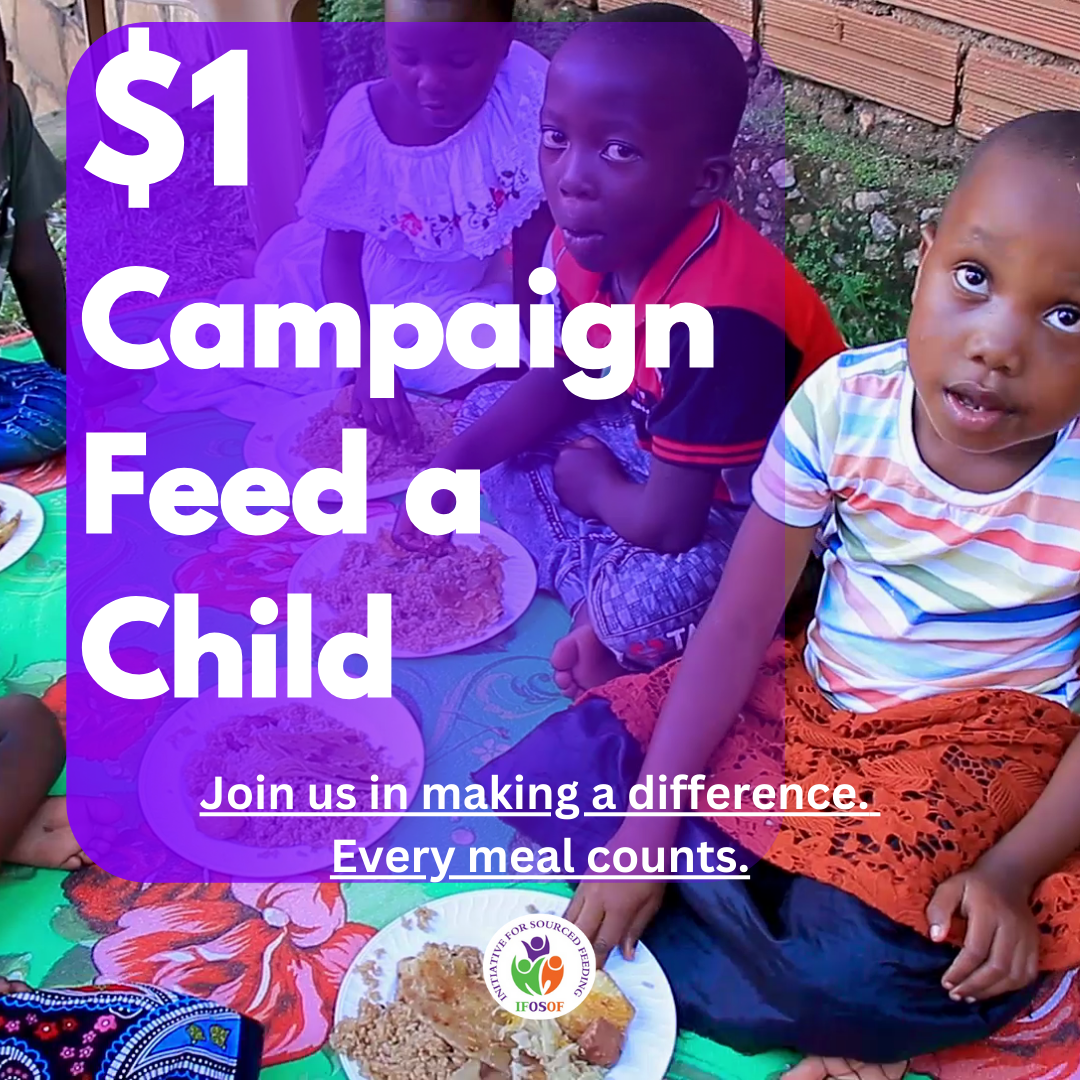
At the Initiative for Sourced Feeding (IFOSOF), we believe sustainable agriculture, improved nutrition and community empowerment are essential pillars in the fight against malnutrition.
Our conviction is simple: to nourish a child sustainably, we must also empower the family and strengthen the community around that child.
Understanding Child Malnutrition: More Than Just Hunger
Malnutrition is often misunderstood as simply not having enough food. In reality, it is much more complex.
It occurs when the body does not receive the right amount or balance of nutrients needed for healthy growth and development. A child may have access to food and still suffer from malnutrition if their diet lacks essential vitamins, minerals, proteins and other nutrients.
In Uganda, poverty, food insecurity, limited dietary diversity, inadequate sanitation, illness and insufficient nutrition knowledge can all contribute to child malnutrition.
The consequences can be devastating:
Stunted Growth: Chronic undernutrition can prevent children from reaching their full physical growth potential.
Impaired Brain Development: Inadequate nutrition during critical stages of childhood can affect learning, memory and cognitive development.
Increased Vulnerability to Disease: Malnutrition weakens the body's ability to fight infections and recover from illness.
Lost Opportunities: Poor nutrition can affect school attendance, concentration, educational achievement and future productivity.
Behind every statistic is a child whose potential deserves a chance.
Nourishing change - PART II
SINCE 2019
AGRICULTRE
Nourishing Change: How Sustainable Agriculture Can Help Fight Child Malnutrition in Uganda
Every child deserves more than a meal. Every child deserves the nourishment needed to grow, learn, dream and reach their full potential.
Imagine a child going to bed hungry, not because food does not exist, but because their family cannot afford or access the nutritious food they need. Imagine a mother watching her child struggle to grow, wishing she could provide better meals but lacking the resources, knowledge or means to do so.
For many vulnerable families in Uganda, this is a difficult reality.
Child malnutrition remains one of the major challenges affecting children's health, development and future opportunities. But what if the solution to this challenge lies beyond hospitals, health centres and food donations? What if part of the answer is found in our gardens, farms, communities and the knowledge we share?
At the Initiative for Sourced Feeding (IFOSOF), we believe sustainable agriculture, improved nutrition and community empowerment are essential pillars in the fight against malnutrition.
Our conviction is simple: to nourish a child sustainably, we must also empower the family and strengthen the community around that child.
Understanding Child Malnutrition: More Than Just Hunger
Malnutrition is often misunderstood as simply not having enough food. In reality, it is much more complex.
It occurs when the body does not receive the right amount or balance of nutrients needed for healthy growth and development. A child may have access to food and still suffer from malnutrition if their diet lacks essential vitamins, minerals, proteins and other nutrients.
In Uganda, poverty, food insecurity, limited dietary diversity, inadequate sanitation, illness and insufficient nutrition knowledge can all contribute to child malnutrition.
The consequences can be devastating:
Stunted Growth: Chronic undernutrition can prevent children from reaching their full physical growth potential.
Impaired Brain Development: Inadequate nutrition during critical stages of childhood can affect learning, memory and cognitive development.
Increased Vulnerability to Disease: Malnutrition weakens the body's ability to fight infections and recover from illness.
Lost Opportunities: Poor nutrition can affect school attendance, concentration, educational achievement and future productivity.
Behind every statistic is a child whose potential deserves a chance.